 Friday, July 17, 2026
University of Baltimore’s Thumel Business Center
11 W. Mount Royal Avenue
Baltimore, MD 21201
8:30am-4:15pm
Registration is now closed for Baltimore Data Day 2026!
Join us for a Zoom meeting on Thursday, July 16th at noon for a State of Baltimore’s Neighborhoods presentation! Register today!
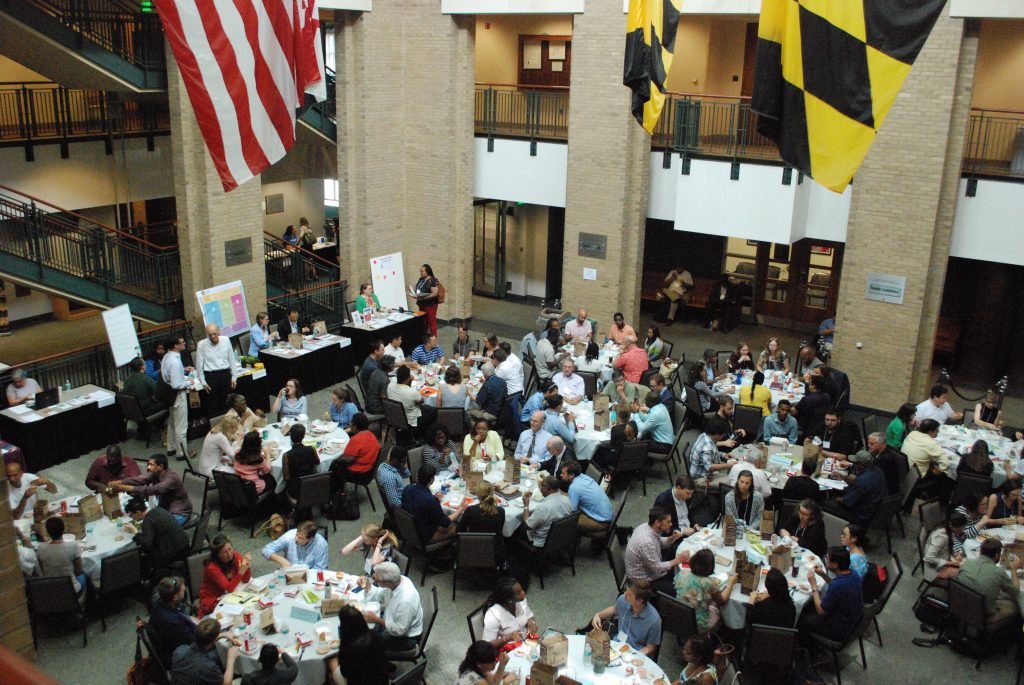
For more than fifteen years, the Baltimore Neighborhood Indicators Alliance-Jacob France Institute’s Baltimore Data Day has brought advocates, agencies, and analysts together to champion a shared goal: using data to transform our city and our neighborhoods.
2026 marks a moment of true optimism and promise for Baltimore City. The city is celebrating historic violence reductions, making meaningful progress on vacancy reduction and block-by-block redevelopment, and implementing innovative, community-based solutions to end childhood poverty. The momentum of these initiatives, and countless others, is palpable. However, these achievements occur against a backdrop of uncertainty about the future of our careers, our health, and our neighbors. This year, Baltimore Data Day showcases partnerships, and the connections between people and organizations, to share, reflect, and celebrate hard fought victories. It’s a day to learn and reflect on creative collaborations that brought us to this moment and aim to imagine the future anew.
For the 17th annual Baltimore Data Day, held July 17, 2026, at the University of Baltimore, BNIA-JFI will convene eight topic-driven panels that bring together voices from the city, the state, and the local community to discuss emerging gaps and new opportunities for collaboration. We will once again conclude the day with workshops that move panel discussions from a place of knowledge to one of action and strategy.
Data Day 2026 Agenda – Friday, July 17, 2026
Each panel will features a presentation and discussions from representatives from various agencies and community organizations. These panels explored data needs, gaps, and alternative collection methods. Panelists will discuss how to continue momentum in the face of losses in funding, building and maintaining community trust, rebuilding capacity, and progress on the horizon.
The day will conclude with facilitated discussions that move the panel discussions from a place of knowledge to one of action and strategy, with discussions on storytelling, organizing, open data, and capacity building.
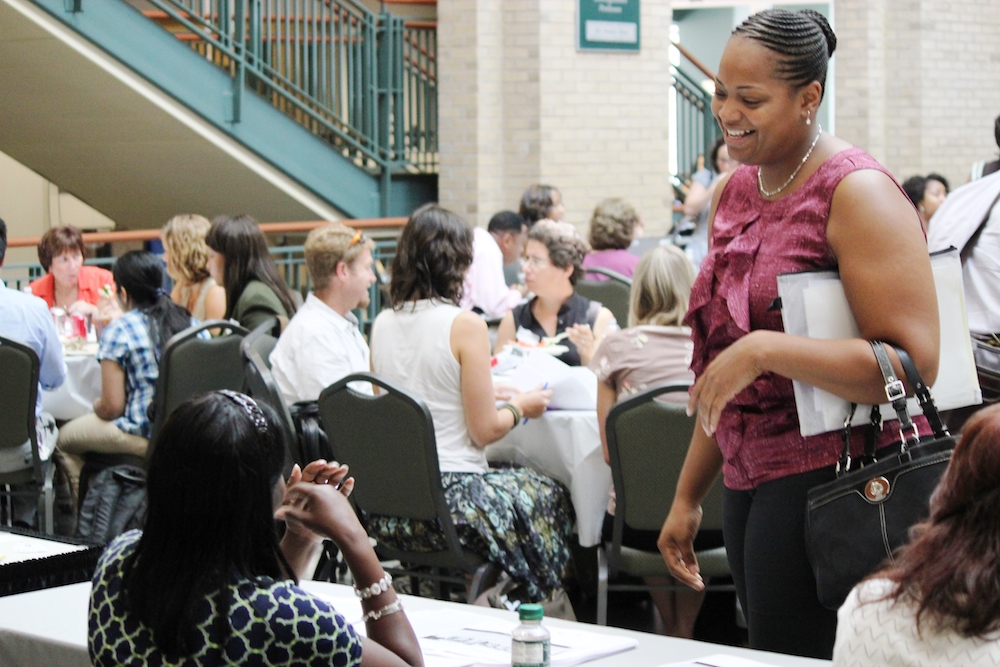
Check-In and Coffee (Pastries and Coffee) (8:30am – 9:00am)
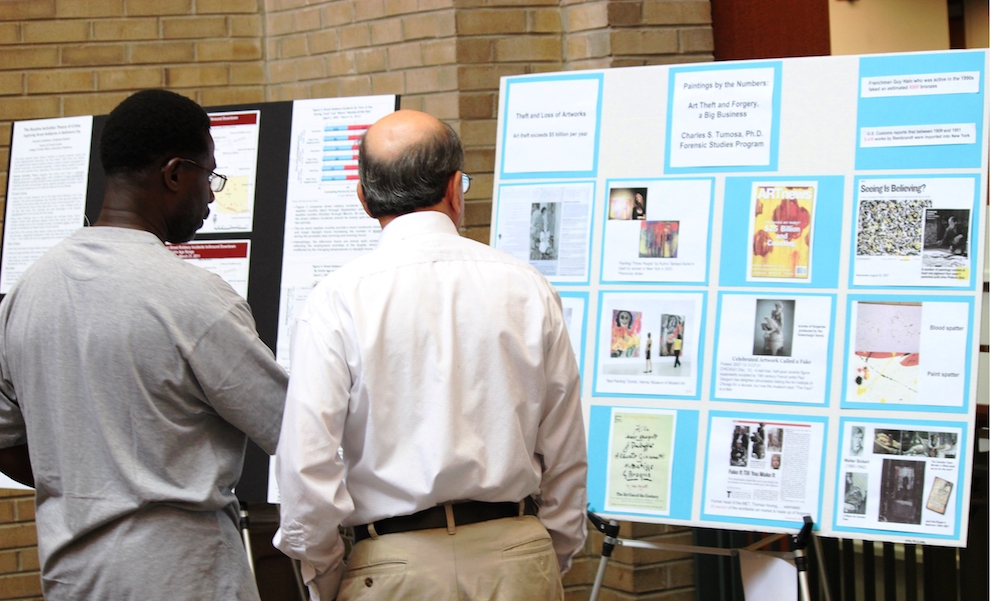
- Browse resource tables, the Job Board, and catch up over coffee and pastries.
Welcoming Remarks and Keynote Panel (9:00am – 10:20am)
- Magui Cardona, University of Baltimore
- Amanda Phillips de Lucas, Ph.D., Baltimore Neighborhood Indicators Alliance – Jacob France Institute (BNIA-JFI)
- Keynote: Choosing to Imagine the Future
At its simplest, data are records of a particular object at a point in time. In aggregate, data help us to understand context or a landscape, develop a plan, or set goals for change to come. However, it’s important that we don’t confuse what has been for what ought to be. With the rapid rise of large language models and other generative tools that use data to make predictions, there is risk in reproducing errors, biases, and fundamentally, the systems of injustice from which our current data emerge. This keynote panel brings together voices from across Baltimore to reflect on what it means to be creative at this moment in time, and what creativity looks like as we aim to solve complex problems. Panelists will discuss what it looks like to build systems anew, to organize, and to imagine what could be.
- Panelists:
- John Duda, Red Emma’s
- Justin Williams, City of Baltimore
- Terrance Smith, City of Baltimore
- Ariana Parrish, Nosreme Baltimore
- Moderator:
- Amanda Phillips de Lucas, Ph.D., BNIA-JFI
Concurrent Morning Panels (10:30am-11:45am)
- ‘Lost to the System’: Uncovering Cheltenham’s History Through Archival Digging, Data Analysis
This panel will describe the archival research and data analysis into the history of the House of Reformation and Instruction for Colored Children at Cheltenham, a juvenile detention facility in Prince George’s County. Between 1860 and 1942, an estimated 243 boys died at Cheltenham compared to 26 at the all-white school for boys, the House of Refuge for Juvenile Delinquents, now the Charles H. Hickey Jr. School in Baltimore County. Students at the Philip Merrill College of Journalism at the University of Maryland digitized hundreds of primary source documents in state and city archives and conducted a data analysis of the material. The stories were published on Capital News Service. The panel will describe the approaches and challenges of working with archival material and performing a data analysis on the material. It will discuss the benefits and drawbacks of using artificial intelligence tools such as Google Pinpoint and data programs such as R to extract narratives over time.
- Panelists:
- Nicole Ramos, Philip Merrill College of Journalism, University of Maryland, College Park
- Mara Bell, Philip Merrill College of Journalism, University of Maryland, College Park
- Rob Wells, Ph.D., Philip Merrill College of Journalism, University of Maryland, College Park
- William Kelly, Ph.D., Maryland State Archives
- Moderator:
- Lawrence Lanahan, Freelance Journalist; Affiliate Communication Faculty at Loyola University Maryland
- Thriving Communities, Informed Investments: Housing Data for Equitable Community Development
Strategic, data-driven investment in Baltimore’s single-family housing stock is essential to equitable community development. In this panel, participants will discuss how developers, city agencies, and data practitioners use housing data to guide community development work without displacement. Learn how Blank Slate and ReBuild Metro use data to identify and prioritize development opportunities, how DHCD leverages data to manage programs and direct investment to neighborhoods where it’s needed most, and how Reinvestment Fund builds data tools and analytical frameworks to support equitable neighborhood investment across the city.
- Panelists:
- Henry Waldron, Baltimore City Department of Housing and Community Development (DHCD)
- Alex Aaron, Blank Slate Construction Development Management (CDM)
- Sean Closkey, ReBUILD Metro
- Colin Weidig, Reinvestment Fund
- Moderator:
- Chris Warman, Reinvestment Fund
- Data in Neighborhood Advocacy and Economic Development
This panel will explore how data can be used to strengthen neighborhood advocacy. Panelists will share examples of using data to identify community needs, engage residents, and influence policy and investment decisions. Topics will include neighborhood organizing around educational equity, leveraging data to address persistent poverty through place-based strategies, and applying data to guide investments and opportunities in Maryland’s ENOUGH initiative. Together, the discussion will highlight how community organizations are translating data into action to improve outcomes for neighborhoods.
- Panelists:
- Moderator:
- Tiffany Snead-Rose, Family League of Baltimore
- From Strategy to Impact: Data-Driven Vacant Lot Management in Baltimore
Baltimore’s approach to vacant lot management is evolving from a long-term land management strategy into an integrated model for operations, performance management, evaluation, and neighborhood investment. Born out of the Department of Planning’s Green Network Plan, Clean Corps established a coordinated approach to vacant land stewardship that combines operational excellence, data-driven decision-making, and community partnerships to improve neighborhood conditions. This panel will explore how strategic operations, real-time dashboards, program evaluation, the emerging Vacant Lot Maintenance Index, and beautification initiatives work together to inform decisions, measure impact, and support more strategic investments in Baltimore’s neighborhoods. Panelists will share lessons learned from designing, implementing, and continuously improving a data-informed approach to vacant lot management, while discussing opportunities for future innovation and collaboration.
- Panelists:
- Nichole Stewart, Baltimore City Department of Planning
- Treston Codrington, Baltimore City Department of Planning
- Maddy Silberger-Franek, Baltimore City Department of Planning
- Tori Derrough, Preston 2k Block Association
- Moderator:
- Dartanion Swift-Williams, Mayor’s Office of Performance and Innovation
Lunch and Hands-On Technical Workshops (11:45am -1:00pm)
- Intro to R, led by Ava Hoffman – Data Scientist and Ecologist, Johns Hopkins University
Have you heard of “R”? It is a free, open-source programming language and suite of statistical packages used for all things data: data management, data cleaning, data augmentation, statistical analyses, spatial- and temporal-data analyses, data visualization, and much, much more. The purpose of this workshop is to introduce you to the basics of R and how to work with BNIA data. Participants can expect to leave feeling acquainted with some of the key concepts of how R works, with a knowledge of few basic commands, and with a reproducible pipeline for retrieving, analyzing, and visualizing data.
Concurrent Afternoon Panels (1:00pm – 2:15pm)
- Block by Block: Baltimore Vacants Reinvestment Initiative
- The Baltimore Vacants Reinvestment Initiative (BVRI) provides capital to Baltimore City, Maryland Stadium Authority, and Baltimore City’s community-based development organizations (CDOs) to successfully redevelop vacant properties. This discussion-based panel will showcase the partnerships that guide and shape the activities to support whole block outcomes. Participants from the development community, state agencies, and neighborhood organizations will discuss the motivations behind this work, the collaboration shaping strategies, and how partners have overcome challenges to move this work forward.
- Panelists:
- Victor Akinnagbe, Baltimore Redlining and Blight Elimination CDC
- Wanda Best, Upton Planning Committee
- David Birkenthal, Maryland Department of Housing and Community Development
- Ben Glover, Healthy Neighborhoods Inc.
- Armstead Jones, Real Estate/Entrepreneur
- Krystle Okafor, Maryland Community Investment Council
- Moderator:
- Bob Pipik, Healthy Neighborhood Inc.
- The Architecture of Collaboration: Using Data, Leadership and Shared Investment to Transform West North Avenue
Traditional economic development efforts often focus on individual projects, business attraction, or physical redevelopment. The West North Avenue Development Authority (WNADA) is advancing a comprehensive, place-based model that integrates public safety, resident leadership, strategic use of anchor institution assets, business and economic development, and research-driven decision-making into a unified revitalization strategy. This session will examine how these interconnected components are being used to address decades of disinvestment along the West North Avenue Corridor. Participants will explore how WNADA combines data, community engagement, and cross-sector partnerships to guide investment decisions, improve public safety, foster social cohesion, and support equitable economic growth. The panel will also demonstrate how a hyperlocal economic development agency can function as both an implementation entity and a learning model for community revitalization by leveraging collaboration with residents, anchor institutions, researchers, and practitioners to inform policy, measure outcomes, and drive long-term impact.
- Panelists:
- Andre Bonaparte, Frontline Management Services
- Leon Pinkett, Baltimore Arts Realty Corporation
- Keondra Prier, Reservoir Hill Association
- Ronald Williams, Ph.D., Coppin State University
- Moderator:
- Christy Turner, West North Avenue Development Authority
- Turning Data into Action: Using Rider Feedback and Performance Data to Improve Transit
This panel brings together representatives from the Rider Experience Team, Office of Performance Management, and Service Information Team within the Maryland Transit Administration’s Office of Customer Experience to discuss how they use rider feedback, operational performance metrics, real-time information and technological solutions to better understand and improve the rider experience. Panelists will share how qualitative insights gathered through rider interviews, observations, workshops, and surveys are combined with quantitative performance data, key performance indicators (KPIs) and real time information data, to identify customer pain points, uncover root causes, and prioritize improvements. Through real-world examples, the panel will focus on how to better understand rider experiences and address challenges associated with service disruptions, service delivery, and transit reliability. The discussion will highlight the development of performance measures to evaluate MTA service during disruptions, strategies to enhance disruption-related communications, and initiatives that leverage real-time information to help riders navigate service changes, including the deployment of real-time information tracked bus shuttle services. The discussion will underscore the importance for how cross-functional collaboration enables teams to connect the voice of the customer with operational decision-making, resulting in more responsive, reliable, and customer-focused transit services.
- Panelists:
- Cole Greene, Maryland Transit Administration
- Roy Shin, Maryland Transit Administration
- Shreenita Ghosh, Maryland Transit Administration
- Stewart Mader, Maryland Transit Administration
- Moderator:
- Roxana Beyranvand, Maryland Transit Administration
- Data in Legislation and Advocacy
Data is an important tool to shape and guide legislation. In this panel, the audience will hear from an elected representative, a government affairs professional, and a local advocate. Panelists will discuss how data is used in the research for and crafting of legislation, how data is used to present policies to law makers, and how advocates use data to drive stories that resonate with elected officials. Think School House Rock for data driven change! This panel comes at an opportune time as now is the time of year to work with elected officials in advance of the 2027 legislative session.
- Panelists:
- Del. Robbyn Lewis, 46th District, Maryland House of Delegates
- Bryan Alston, State Circle Strategies
- Adrianne Black, Independent Communications Strategist
- Moderator:
- Kat Hyland, Maryland Department of Labor
Coffee Break & Data Dash Presentations (2:15pm-3:00pm)
From Data to Action Sessions (3:00pm-4:15pm)
- Transportation Data and Advocacy
Transportation 101, an advocacy training academy led by the Central Maryland Transportation Alliance, develops community leaders poised to enhance communities by supporting transit access in the region. Graduates of the program are well equipped to help policy makers, business leaders, and the public make informed decisions about transportation choices and infrastructure investments. In this Data to Action workshop, Transportation 101 leaders and alumni will describe tactics and approaches for using data to support transit advocacy using projects developed through the academy. The workshop will also include a power mapping exercise that aids participants in developing a strategic approach to advocacy.
- Led by: Eric Norton, Central Maryland Transportation Alliance
- Using Qualitative Data to Make Your Numbers Speak
Quantitative data can go far in delivering insight and making the case for change. Mixed methods approaches can increase the impact of that data with an experience-centered narrative, adding texture and nuance, and answering questions raised in the quantitative data. In this session, Emily Dowdall and Robert Cox will discuss how to build out simple and effective qualitative research tools, such as surveys and structured interviews, to give voice to your numbers. The session will explore examples of mixed methods research that have informed housing programs and policy.
- Led by: Emily Dowdall and Robert Cox, Reinvestment Fund
- Security and Privacy Basics
This workshop will give an introductory overview of security and privacy practices, both online and offline. While this is not comprehensive digital security training, participants will learn about some of the modern-day threats to privacy, broad concepts like security culture and threat modeling, and what data might exist about you and how to take back some control over it. The workshop will share some resources for more specific solutions, such as a digital self-defense guide, some tips for deciding what services to trust, and suggestions on more privacy- and security-oriented tools you can start using today.
- Led by: Camille Seaberry, DataHaven
Archive of Past Data Day Presentations
Sponsorship Opportunities
Sponsorship opportunities are available to organizations or individuals who would like to support Baltimore Data Day. Event sponsorship supports the mission of BNIA‐JFI, guarantees the conference remains free and open to the public, and ensures that requests by community development corporations and other community‐based organizations will continue to be serviced free of charge. Visit our Donation page or email us at [email protected] for more information about sponsoring this event.
Baltimore Data Day 2026 is made possible by our generous sponsors: